

L’articolo è stato aggiunto alla lista dei desideri
mondadoristore.click, l'altro eCommerce


LIBRO INGLESE
 E-mail
 Facebook
 LinkedIn
 Twitter
 WhatsApp
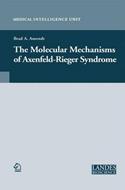
The Molecular Mechanisms of Axenfeld-Rieger Syndrome
(0)
Cliccando su “Conferma” dichiari che il contenuto da te inserito è conforme alle Condizioni Generali d’Uso del Sito ed alle Linee Guida sui Contenuti Vietati. Puoi rileggere e modificare e successivamente confermare il tuo contenuto. Tra poche ore lo troverai online (in caso contrario verifica la conformità del contenuto alle policy del Sito).
Grazie per la tua recensione!
Tra poche ore la vedrai online (in caso contrario verifica la conformità del testo alle nostre linee guida). Dopo la pubblicazione per te +4 punti 
208,30 €
+2080
punti 
Venditore: IBS
Articolo acquistabile con Carta del Docente

Articolo acquistabile con Carta Cultura Giovani e Carta del Merito

Articolo acquistabile con Carta della Cultura

Paga con Klarna in 3 rate senza interessi per ordini superiori a 39 €

Dati e Statistiche
 Salvato in 0 liste dei desideri
Salvato in 0 liste dei desideri
The Molecular Mechanisms of Axenfeld-Rieger Syndrome
Disponibilità in 2 settimane
208,30 €
208,30 €
Disponibilità in 2 settimane
Altre offerte vendute e spedite dai nostri venditori
Libri in Inglese
The Molecular Mechanisms of Axenfeld-Rieger Syndrome
Altri venditori
Prezzo e spese di spedizione

LIBRO INGLESE
Disponibilità in 2 settimane

Venduto e spedito da
IBS
Spedizione Gratis
208,30 €
Altri venditori
Prezzo e spese di spedizione
LIBRO INGLESE
Disponibilità in 2 settimane
Venduto e spedito da
IBS
Spedizione Gratis
208,30 €
Altri venditori
Prezzo e spese di spedizione

Tutti i formati ed edizioni

Promo attive (0)
We are excited to bring together recent research on the molecular biology of Axenfeld-Rieger syndrome (ARS) disorders. In the following chapters we will review and provide direct evidence for the molecular basis of this group of heterogeneous disorders, which include Rieger syndrome and Rieger anomaly. While ARS patients were initially diagnosed in the early 1930s the genetic basis for ARS was unknown until the recent identification of chromo- somal loci associated with this genetic disorder. In the mid-1990s Drs. Jeffrey C. Murray and Elena V. Semina identified PITX2 through positional cloning tech- niques as a gene associated with ARS. These researchers were able to iden- tify point mutations in PITX2 that were linked with ARS patients. ARS patients presented clinically with several developmental anomalies that fur- ther provided clues about the function of the PITX2 homeobox tran- scription factor. The phenotypic variability of ARS patients indicates that PITX2 can participate with many other faaors to control normal development processes. The hallmarks of ARS developmental anomalies are eye, tooth and umbilical defects. However, abnormal pituitary, heart, and craniofacial development are also detected. Thus, ARS patients provided the first link of PITX2 involvement in the development of these organs and structures. Some of these anomalies are recapitulated in epigenetic and genetic mouse, chick, zebrafish and frog studies which will be reviewed in the following chapters.
Leggi di più
Leggi di meno
Curatore:
Editore:
Collana:
Medical Intelligence Unit
Anno:
2005
Rilegatura:
Hardback
Pagine:
106 p.
Testo in English
Dimensioni:
234 x 156 mm
EAN:
9780387262222

L'articolo è stato aggiunto al carrello
Informazioni e Contatti sulla Sicurezza dei Prodotti
Le schede prodotto sono aggiornate in conformità al Regolamento UE 988/2023. Laddove ci fossero taluni dati non disponibili per ragioni indipendenti da IBS, vi informiamo che stiamo compiendo ogni ragionevole sforzo per inserirli. Vi invitiamo a controllare periodicamente il sito www.mondadoristore.click per eventuali novità e aggiornamenti.
Per le vendite di prodotti da terze parti, ciascun venditore si assume la piena e diretta responsabilità per la commercializzazione del prodotto e per la sua conformità al Regolamento UE 988/2023, nonché alle normative nazionali ed europee vigenti.
Per informazioni sulla sicurezza dei prodotti, contattare productsafetyibs@feltrinelli.it
L’articolo è stato aggiunto alla lista dei desideri
